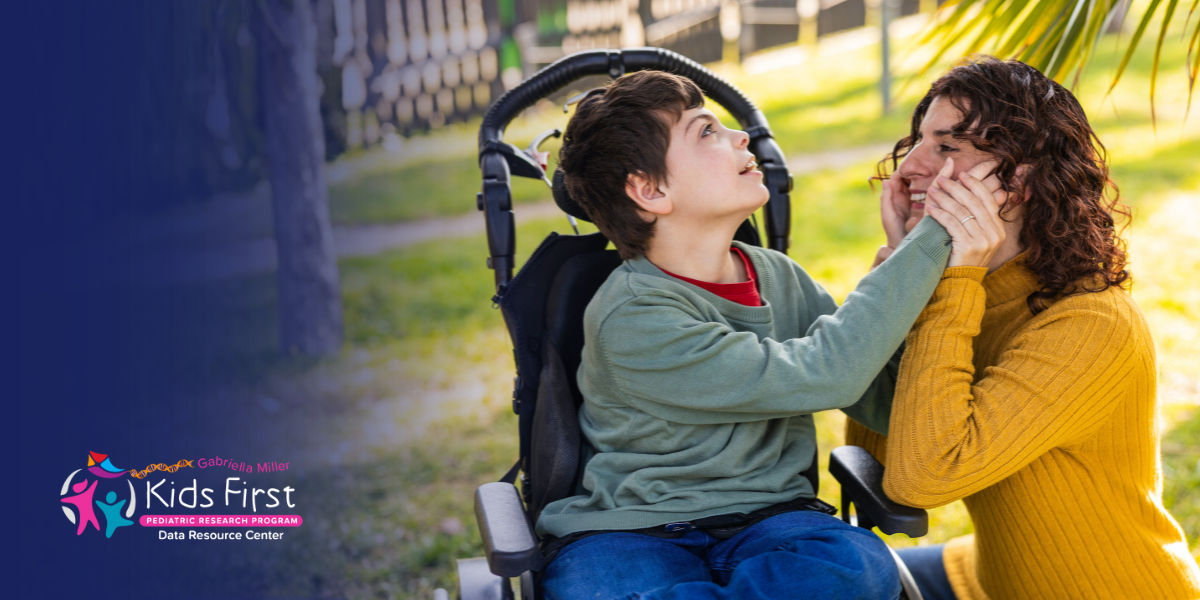
Every child’s story begins before the world even knows their name.
For families whose children are born with congenital disorders, that story often opens with urgent questions: What does this mean? Why did this happen? What comes next? In the swirl of appointments, acronyms, and unknowns, “rare” can feel like “alone.”
But rare does not mean alone.
Across hospitals, research centers, and living rooms, families are facing different diagnoses that are intrinsically connected. Their children’s experiences, challenges, and medical data are part of a larger picture—one that, when brought together, can reveal answers none of us could see in isolation.
This is The Rare We Share: a growing community of families, scientists, clinicians, and advocates turning individual stories into shared discovery for children with congenital disorders.
A Shared Foundation for Discovery
The Gabriella Miller Kids First Pediatric Research Program (Kids First) was built for this moment—for the children whose conditions are often overlooked, underfunded, or misunderstood. By combining clinical and genomic data from thousands of children with cancer and structural congenital disorders, Kids First creates a space where stories inform one another and overlapping insights point the way to better care.
Behind every dataset is a child. Behind every analysis is a family that said “yes” to being part of something bigger.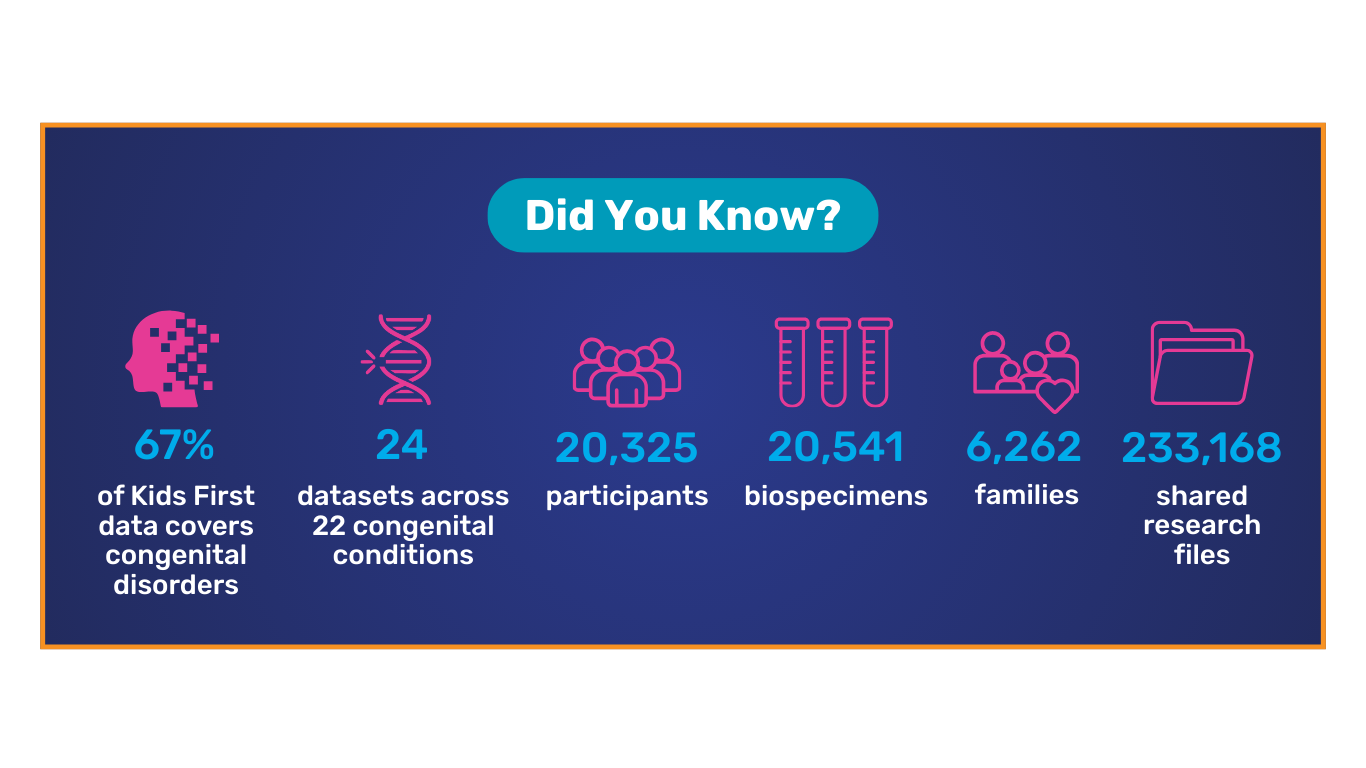
When One Story Opens the Door for Another
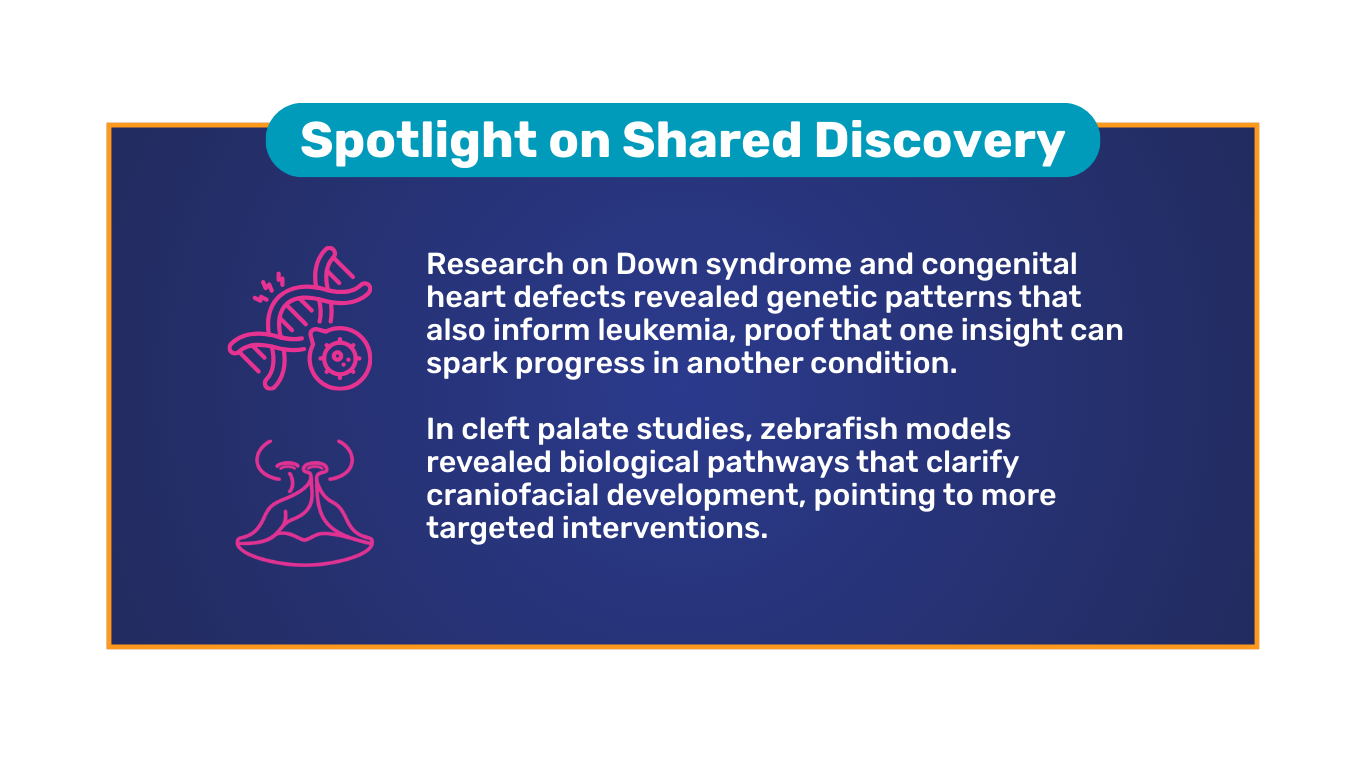
Breakthroughs don’t always come from studying one condition at a time. Sometimes, the biggest discoveries happen when scientists look across many conditions and find what they share.
This kind of cross-condition research is a unique example of how Kids First turns shared data into shared progress.
When families contribute their child’s data, it’s added to thousands of others in the Kids First Portal. Together, these stories help researchers notice patterns no one could see alone—links between genes, pathways, and conditions that reveal new ways to understand and treat disease.
For parents, this means a child’s story doesn’t end with their diagnosis. It becomes part of a larger conversation—one that may guide doctors, shape treatments, or spark answers for another family still searching. And the reverse is true: discoveries made through another family’s story might one day help yours.
Where Compassion and Science Meet
Families often ask, “What does data actually do for my child?”
The answer is both simple and profound: when data are shared, researchers can see a fuller picture.
Shared data help scientists:
- Recognize patterns faster
- Design smarter studies and trials
- Ask better questions about diagnosis, outcomes, and quality of life
- Ensure even ultra-rare conditions are part of discovery
“When families and researchers share data, we’re not just filling a database,” notes Allison Heath, PhD, a data science leader with Kids First. “We’re building a shared resource that any qualified researcher can use to move faster for kids with congenital disorders. It’s about turning individual courage into collective progress.”
That’s the true overlap at the center of The Rare We Share—where compassion meets science, and courage, curiosity, and collaboration turn research into something deeply human.
How you can “Share the Rare”
If you’re a parent, caregiver, advocate, clinician, or supporter, you’re part of this story. Every story shared, every dataset contributed, every conversation sparked—that is the rare we share.
And in that shared space, hope doesn’t just exist. It grows.
Learn more and see what connects us all through The Rare We Share.






 Bluesky